
How Myoki’s peptide mechanism supports muscle growth and recovery and why it matters for athletes, active professionals, and patients in the UAE.
KTS Medical Affairs · KTS Drugstore L.L.C. · Published June 2026 · 5 min read
IN THIS ARTICLE
1. Why muscle matters more than most people think
2. The biology of muscle: what actually drives growth and loss
3. Where peptides fit in: a more precise approach
4. What the clinical evidence shows
5. Who Myoki is for
6. The bottom line
1. Why Muscle Matters More Than Most People Think
Muscle is not just an aesthetic concern. It is the primary metabolic organ of the human body responsible for up to 80% of glucose disposal after meals, a major determinant of resting metabolic rate, and a critical factor in long-term mobility, fall prevention, and recovery from illness or surgery. Losing muscle doesn’t just change how you look; it fundamentally changes how your body functions.
Yet muscle loss is remarkably common and starts earlier than most people expect. Adults begin losing skeletal muscle mass as early as their 30s, at a rate of 3–8% per decade. After the age of 60, this can accelerate significantly a condition known as sarcopenia that affects 10–27% of adults over 60 globally and is now classified as a standalone disease.
3–8%muscle mass lost per decade from your 30s onwards |
10–27%of adults over 60 affected by sarcopenia globally |
87distinct peptides identified as linked to muscle health in a 2025 scoping review of 126 studies |
In the UAE specifically, the intersection of a sedentary lifestyle, high obesity rates, and a rapidly ageing expatriate and national population creates a significant and growing muscle health challenge. At the same time, Dubai’s active fitness culture with its world-class gyms, sports medicine centers, and high-performance athletes drives genuine demand for clinically credible muscle support solutions that go beyond standard protein powder.
2. The Biology of Muscle: What Actually Drives Growth and Loss
Skeletal muscle exists in a constant state of turnover. Muscle protein synthesis (MPS) the process by which new muscle fibres are built is always running in parallel with muscle protein breakdown (MPB). Muscle grows when MPS exceeds MPB over time. It shrinks when the reverse is true.
Several biological factors regulate this balance. The most relevant for understanding peptide-based supplementation are:
1. Myostatin: the brake on muscle growth
Myostatin (GDF-8) is a protein produced by muscle cells that acts as a powerful negative regulator of muscle mass. It actively inhibits muscle growth by suppressing the IGF-1/Akt pathway one of the primary drivers of protein synthesis. Individuals or animals with myostatin deficiency exhibit pronounced muscle hypertrophy; conversely, elevated myostatin is associated with accelerated muscle loss. Inhibiting or modulating the myostatin pathway is therefore a key target in muscle health science.
2. mTOR signaling: the growth accelerator
The mTOR (mechanistic target of rapamycin) pathway is the central anabolic signaling hub in skeletal muscle. When activated by amino acids, resistance training, or peptide signals it drives muscle protein synthesis and inhibits breakdown. Many bioactive peptides work by upstream activation of mTOR signaling.
3. Satellite cell activation: repair and regeneration
Muscle satellite cells are the resident stem cells of skeletal muscle. After exercise, injury, or surgical trauma, satellite cells are recruited to repair damaged fibers and fuse into existing muscle cells, enabling tissue regeneration. Peptide signals play an important role in regulating satellite cell activation and differentiation.
|
The key insight: muscle growth is not simply a matter of eating more protein or lifting heavier weights. It is a complex hormonal and molecular signaling process, one that peptide supplements like Myoki are specifically designed to support at the biological level. |
3. Where Peptides Fit In: A More Precise Approach to Muscle Support
A 2025 scoping review published in PMC covering 126 studies and identifying 87 distinct peptides linked to muscle wasting confirmed that bioactive peptides represent one of the most active and evidence-rich areas of research in muscle health science. Unlike broad-spectrum protein supplements, which provide raw amino acid material for muscle synthesis, peptides act as targeted molecular signals communicating directly with the biological pathways that govern muscle growth, repair, and preservation.
The mechanisms through which bioactive muscle peptides work include inhibition of myostatin and related TGF-β family signalling, activation of the IGF-1/Akt/mTOR protein synthesis pathway, stimulation of satellite cell recruitment and differentiation, and reduction of pro-inflammatory cytokines that accelerate muscle breakdown in recovery contexts.
A comprehensive 2026 review in JCSM Communications covering all major nutritional interventions for sarcopenia from PubMed and Embase through 2025 concluded that peptide-based supplementation combined with resistance training produces measurably superior outcomes to conventional protein supplementation alone, particularly in older adults and post-surgical patients where muscle protein synthesis efficiency is already reduced.
4. What the Clinical Evidence Shows
|
PMC Scoping Review · 126 studies · Published 2025 87 distinct peptides identified as linked to skeletal muscle health, covering mass, strength, and functional performance A comprehensive search of Embase, PubMed and Web of Science through October 2024 included 126 studies on peptides and muscle wasting. Peptides were identified as acting across all three pillars of muscle health: mass, strength, and functional performance through multiple distinct biological mechanisms, confirming that the peptide approach to muscle health is mechanistically diverse and clinically relevant. |
|
ACS Pharmacology & Translational Science · May 2026 Myostatin inhibitory D-peptides induce skeletal muscle hypertrophy and alter bioactive sphingolipid metabolism Research published in ACS Pharmacology & Translational Science confirmed that myostatin inhibitory peptides produce measurable skeletal muscle hypertrophy by antagonising the IGF-1/Akt signalling pathway. The study further identified changes in sphingolipid metabolism as a secondary mechanism, suggesting broader effects on muscle cell health beyond direct hypertrophy signalling. |
|
Dubai Health Authority · Systematic Review · July 2025 Nutritional supplements including peptide-based formulations show significant positive effects on sarcopenia-associated outcomes in elderly patients A systematic review and meta-analysis conducted by researchers at Dubai Health, specifically relevant to the UAE clinical context assessed the impact of nutritional supplements on muscle mass, strength, and function in sarcopenic patients. The review confirmed that supplement interventions, particularly those targeting protein synthesis pathways, produce statistically significant improvements in muscle health outcomes. |
5. Who Myoki Is For
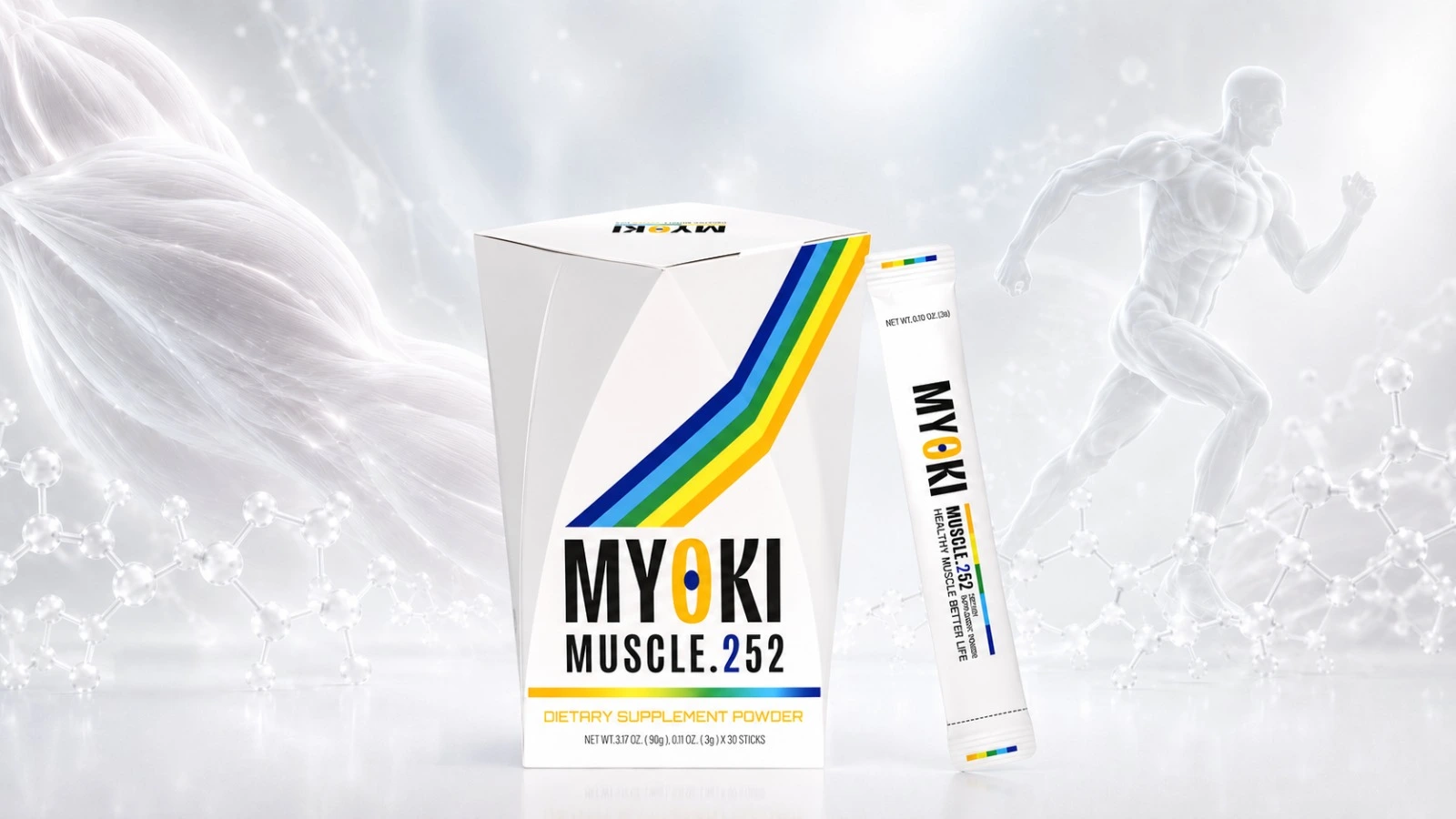
Myoki Muscle.252 by Caregen distributed exclusively in the UAE by KTS Drugstore L.L.C. is a peptide-based dietary supplement powder (30 sachets × 3g per box) formulated to support muscle growth, accelerate recovery, and preserve lean muscle mass. It is designed for:
• Athletes and active individuals seeking to accelerate post-training muscle recovery and support lean mass development
• Post-surgical and rehabilitation patients where peptide supplementation can support the accelerated muscle repair and satellite cell recruitment that surgery disrupts
• Adults over 40 looking to proactively address the muscle loss that begins in the fourth decade of life and compounds with age
• Physiotherapy and sports medicine clinics seeking a pharmaceutical-grade, clinically credible muscle support product to recommend alongside rehabilitation programmes
• Individuals managing body composition during or after a weight loss programme, where lean muscle preservation is critical to long-term metabolic health
|
Clinical channel note: Myoki is distributed through licensed pharmacies, hospitals, physiotherapy clinics, and sports medicine centres by KTS Drugstore L.L.C. It is a dietary supplement powder, not a pharmaceutical drug, and is not intended to diagnose, treat, or cure any disease. Consult a qualified healthcare professional before beginning any supplementation programme. |
6. The Bottom Line
Standard gym supplements protein powder, creatine, BCAAs provide the raw material and basic anabolic support for muscle growth. They work, and they are well-evidenced. But they operate upstream of the biological signalling that ultimately governs how efficiently your body builds and preserves muscle.
Peptide supplements like Myoki work differently. Rather than simply supplying amino acids and hoping the body’s growth machinery responds, they deliver targeted molecular signals directly modulating the myostatin pathway, mTOR activation, and satellite cell behavior that determine whether muscle grows, holds, or declines.
For the UAE’s growing population of athletes, ageing adults, and post-surgical recovery patients, that precision matters. The science is robust, the mechanism is well-characterised, and the clinical evidence supports peptide supplementation as a meaningful addition to any serious muscle health strategy.
To discuss Myoki availability for your clinic, pharmacy, or wellness store or to enquire as a patient, contact KTS Drugstore L.L.C. at info@KTSDrugstore.com or +971 52 811 2498.
Medical Disclaimer: This article is produced by the KTS Drugstore medical affairs team for educational and informational purposes only. It does not constitute medical advice and should not replace consultation with a qualified healthcare professional. Myoki is a dietary supplement powder distributed in the UAE by KTS Drugstore L.L.C. and is not a pharmaceutical drug. Clinical evidence cited refers to the general scientific literature on peptide mechanisms and muscle biology. Individual results vary. Persons with specific health conditions should seek guidance from a DHA or MOH-licensed clinician before beginning any supplement regimen.